Friday, March 2, 2012

Marching Toward Spring!

The "March" toward spring continues. I can feel the change-over in the work I have to do. Most of the inside paperwork and preparation and organizing is done. Now it's turning to growing. I start seeds each week. The earliest varieties were started in January. Then a big batch of perennials and I'm finishing them up along with a few slow starting annuals and some biennials. I've been working in the greenhouse filling pots. Boy, is it nice in there on a sunny day. It's like being in Florida for a few hours - perks me right up. Haven't planted any plugs yet, but that will start soon and then it will be planting straight through until the greenhouse opens, which is APRIL 3, this year.

We did get our new plant list finished up and are posting it here. Just click on each page to open, then print and peruse at your leisure!


One morning on Lucy's walk, we saw a squirrel fight. I think a couple pairs live in the treeline at the back of our property where it touches the alpaca farm. With the leaves off the trees, I can see nests way up in the trees. I don't know if the fight was territorial or a love triangle, but two chased one all over the place. They are so agile. It always amazes me when they jump onto a thin, little branch. The whole branch bends and swings, but they just hold on and then leap to the next one. They finally chased him far enough away to be satisfied.

Our basement has been pretty well refurbished. It got flooded last fall when the tropical storm roared through. We repainted and had flooring put down. John talked me into half linoleum and half carpet, which I wasn't too enthused about. But now I really like it.. And I can work on the lino side with my drieds and it will be easy to clean up.

John got the stock plants out of the garden. That's always a big, spring prep job. I keep stock plants of perennials that I can divide into small plants and just grow them to size up. We put them in trenches in the garden for the winter, insulating the roots. Dig them up, put them in the greenhouse, and soon for some, longer for others, they break dormancy and begin to grow. I'm watching them closely for signs of new growth. It's as good as the seedlings popping up - a sign that spring is coming!

Monday, February 6, 2012

Sloooow Time and then Fast, fast, fast!

I always enjoy the relatively slow time after the holidays. John and I always call January "the slow time." There's always work to do of course, but it's inside work and much of it is paperwork and planning or preparation. I usually consider work you can do sitting down as easier work. It also allows us to work on different projects. This year it was basement repairs from last fall's flooding. We repainted the walls and ceiling and now will pick out flooring. We don't have to install it - just pay for it! Then we'll finish up with the molding and put everything back together.


Now spring preparations begin in earnest. Each week I'll start a batch of seeds. Our order of soil, pots and supplies arrives. That means I can begin filling pots so they're ready to go when planting time arrives. By the end of the month, starter plants arrive and planting begins. I'm glad things pick up gradually. It gives me time to move from the slower winter pace to the busy springtime mode. There always comes a day when the spring rush hits - BOOM - and we're in full swing. Meanwhile, I'll organize the greenhouse and get things ready for spring.


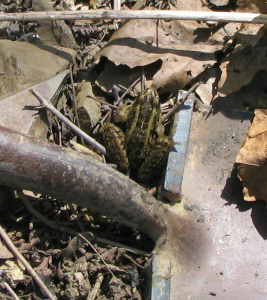
As far as I know, there are still three toads hibernating in the greenhouse. Haven't seen them lately, but as the weather warms up, they usually poke themselves out of the dirt and burrow down again at night. With the protection of the greenhouse, hopefully they will all survive the winter.


I've been using the arnica rub that Tina and Maryanne make on my wrist to deal with a bout of tendonitis. All my aches and pains I blame on playing with Lucy. She loves to play and although she's not rough, she is strong. Of course the fact that I'm getting older doesn't factor in at all... Anyway, I've found the arnica rub very helpful. Arnica has been used for a long time to relieve pain, swelling and bruising. I figure it beats taking pain relievers constantly.


Don't forget! The shop is open three days a week (Thursday through Saturday) 9 am to 5 pm during February and March.

Tuesday, January 31, 2012

Mild Winter, so far!

I'm pretty happy with our winter weather so far. It seems odd that so far, our biggest snowfall was in October. Snow is not good on the greenhouse, of course. Turning the heat on melts the snow off and it accumulates on the sides. We have to shovel that snow away, since the buildup of snow could eventually cause the sides to collapse. So less snow means less shoveling, which suits us. Since having the greenhouses, I have noticed that the majority of snowfalls occur overnight.


I also enjoyed the snow fog after the recent snowfall. Everything is quiet, white and kind of mysterious. I remember snow fog growing up in Mt. Gretna - perhaps because of the trees. Our back corner of the yard is still very wet. Will it ever dry out? When it gets cold, the standing water freezes and I can see all types of interesting things trapped in the ice. All sorts of leaves and twigs and frosted blades of grass frozen there in a kind of life-sized snow globe effect.


The relatively mild weather really has me thinking of spring and I'm seeing signs throughout the yard. Our witch hazel has bloomed with its tiny yellow and red flowers in January, several weeks earlier than its typical February bloom. Both the star magnolia and pussy willow have big, fat buds. I'm surprised at how much is green in the gardens. Pretty little salad burnet has not died off and there's still green parsley, cutting celery and chamomile. There's new green shoots of chives and new growth on bronze fennel, poppies, snapdragons, and reseeded cornflowers which never died off. All the outdoor rosemarys have survived up to this point. I always tell people to let cilantro reseed when it flowers to get a second crop as the weather cools off. With all the rain, I had a bumper crop in the fall. With the mild weather, it produced through December, and even now has some good green growth. All of this is soothing when I get antsy for spring.

Thursday, January 12, 2012

"Winter Break" at Cloverleaf

I'm back after a nice holiday break. Hope you all enjoyed your holidays. We had two very good holiday meals - one rather long and hectic and the second more subdued and relaxed. Very good food both times.

Thanks to all who came out for our Open House and throughout the holiday season. It was a good season for the business and overall a successful year. With the weather and the economy both on the poor side, I consider that quite an accomplishment.

And, believe it or not, I've started work for the spring season. Planted pansy seeds right after Christmas and after New Year's stared a batch of early perennials like cornflower, blue flax and "Lady" lavender. This is the only variety of lavender I start from seed. It is just amazing to me that the tiny seedlings in the little pack have as much aroma as a full-sized lavender plant! What a treat on a cold winter's day to enjoy the fragrance of fresh lavender.

John and I always laugh that January is our slow time. Not much work yet here at the farm and his busy time at work doesn't start for about a month. Once February comes, supplies arrive, there are seeds to start every week and we begin to gear up the greenhouse for spring.

Lots of the work now is cozy, indoor stuff - end of year routine, preparing orders for spring, etc. which leaves time for other things - like making bread. I love to make bread. First of all I love to eat it. Also, there's something very elemental about making bread plus I absolutely love the smell of yeast. I don't know why, but that smell ranks right up there for me along with my favorite herbal and floral scents. I make all kinds of bread. This week was honey wheat toasting bread. Most breads that are good for toasting have wheat germ in them. Also make a pesto bread, cinnamon (yummy with coffee), seeded bread with seeds and dried minced onions on top, and also found a new recipe that incorporates mashed butternut squash in the dough.

The other thing we accomplished was painting our basement. This was the first step in the refurbishment due to last fall's flooding. Next we'll have new flooring installed. We don't have to do that work - just pay for it!

Monday, November 28, 2011

Holiday Open House! Dec 2 & 3

We hope to see many of you at our holiday open house on Friday and Saturday December 2 & 3 from 9 am to 5 pm. We'll have a selection of potted culinary herbs along with live topiaries in the greenhouse, shop specials on handmade soaps and some of our other popular items in the shop, herbal refreshments including hot mulled cider, and prize drawings. I'm hoping the weather will cooperate, although this year it might be asking a lot. We have a very nice selection of tree decorations this year, plus holiday and non-holiday arrangements, great gardening and herbal books, essential and fragrance oils, supplies to make your own body care gifts, lots of fragrant body care products and unique and garden themed gift ideas.

Also new for us this year, we'll be participating in a drop-in open house at our neighbors - Carissa Ressler at 1987 Cloverleaf Rd., just up the road from our place. The date is Saturday, December 10 from 2 - 7 pm. In addition to products from our shop, the open house will feature soy candles, hand designed jewelry, Pampered Chef goods, and fair trade scarves and other items. I'm looking forward to participating and hopefully meeting some new folks.

Lucy will be celebrating her birthday soon - her fifth! We've had her four years, since we adopted her when she was a year old. Here's my annual plea if you're considering adopting a pet. Please, pleas consider a shelter or rescue animal. There are so many animals - all ages and sizes and breeds looking, waiting, and I'm sure hoping for a good, loving home. I've had dogs my whole life and Lucy is one of the best. On some level, she seems to understand that things were bad, and then we came and they got lots better. So many adopted dogs are eager to please, in gratitude for their adoption. I also have to laugh when I see in the paper people selling or trying to sell mixed breed dogs for hundreds of dollars. I don't care what cute name you make up for them, they're still mutts. So if you're going to get a mixed breed, consider a dog or cat that really needs a home.

Saturday, November 5, 2011

Fall in the Garden

Originally written in late Oct:

I noticed a bumper crop of cilantro this fall.  Cilantro is a cool weather annual like lettuce.  It does well early in the season, but like lettuce, bolts when the weather gets hot.  You can sometimes delay this in the garden by providing part shade, but you can't postpone it forever - it's just the nature of the plant.  It then forms its white flower heads, which eventually become seeds.  Let some seeds fall and you'll usually get a second crop when the weather begins to cool off again at the end of the season.  It took awhile for the seed to germinate this year, but with all the moisture, it's a bumper crop.  Harvest the foliage before frost and freeze for winter use.

Outside work is winding down although there's still weeding and cutting back to do.  But now, I'm working mostly in the shop, trying to get things arranged and stocked for the holidays.  It's nice to switch back and forth.  One thing I've noticed about my work habits is that I don't like to do the same thing over and over.  I worked in an office once and it was the same thing each week - same thing on Tuesdays, same thing Thursdays - I didn't care for that.  This job is great.  Very different tasks from spring through fall and winter.  Also I like the process of growing, planting, harvesting and using the things I grow. 

Our holiday open house will be December 2 and 3 from 9 -5.  We've added some interesting gift items and some new soap scents from the "sisters."  You can read about them in the newsletter coming out in November.  It also lists other great, unique gift ideas and don't forget we have lots of supplies and containers for those who make their own products and gifts.  We've had a few D.I.Y customers already.  I'm always so impressed when people start early.

It's supposed to be a bad year for pumpkins, due to all the wet weather.  Butternut squash seems to be plentiful though.  I like it a lot, and if you roast it in the oven it gets delicious.  Thyme is a perfect herb to pair with winter squash.

Early Fall

Written earlier - our apologies to you and to Kathy that we are not as prompt in getting her Blog posts up!  SO this was probably written in mid-October:

Even though the weather feels increasingly like fall, the garden still looks like late summer.  Annual vines that were delayed, like hyacinth bean and mina, are full and looking gorgeous along with pineapple and mexican bush sage, pink and white anemones, flowers for drying like cockscomb, statice and gomprena and even late blooming roses.  I'm not a huge fan of marigolds, but they sure look nice this time of year in their fall parade of colors.  I cut back my calendula or pot marigold hard after the flood and they are re-blooming nicely.  Nasturtiums are still going strong -- I just love their bright, vibrant colors.

I'm also surprised at how many things have really rebounded.  I went through after the flood to clean things up.  I cut back lots of things, perennial and annual, and waited to see what happened.  Most things pushed out new growth and are looking good.  Of course, they're still getting plenty of moisture.  I said to John the other day that they always say one inch of moisture per week is generally sufficient for most plants to do well.  Seems like we've had the inch every other day or so this season.

I'm working on the fall/holiday newsletter that will come out in the beginning of November.  My friend Sandy, who does all of our computer work had a direct lightning strike this summer, which killed her computer.  So we have reconstructed our mailing list.  If you're reading the blog and do not receive your newsletter or wish to be switched to an e-newsletter, please let us know.  Either call with your info (leave a message if you don't get me) or let us know when you visit.  We think we've recreated the list pretty accurately, but we may have inadvertently deleted some names.  We send out 2 newsletters per year, by mid-March and mid-November, so let us know if you haven't received yours.

Lucy is happy with the cooler weather.  She loves to lie in the sun as long as the air is cool.  She can also get back into the wilderness area as things start to die back.  There are loads of interesting smells back there and she loves to check them all out.

Monday, September 5, 2011

Transition

This is a transitional time of year for us. In the spring, it's all plants all the time. I pot plants, water plants, clean plants, sell plants, talk about plants. Now there's still plant work - I'm still harvesting plants from the gardens and we still have plants for sale that must be maintained. Fall is actually a great time to plant perennials. The temps are cooling off and there's usually more reliable rainfall in the autumn. Plants can get established and get a head start compared to spring planting. But the non-plant work gears up now too. I'm working on dried wreaths and arrangements for the shop, harvesting and bunching dried flowers from the gardens and replenishing our stock of bulk herbs grown here on the farm. Also restocking items from our "soap ladies" (the twisted sisters aka Maryanne and Tina) and also cat items and herbal teas from our vendor in State College. I'm also - gasp - getting items for the holidays. But I refuse to put up the tree in the shop until Thanksgiving week. Probably some stores have back to school items next to Christmas displays!

It's interesting, too because I notice sales start to shift. Although we sell items from the shop year-round, in the spring it's mostly plants. We're still selling plants - some sale perennials are left and also some larger sized perennials, but the shop sales are increasing significantly and will hopefully continue to do so through the holidays.

Lucy's still on the lookout for rabbits, but we haven't been seeing too many in the morning. I know there are some around, but they're the smarter ones and I guess they've figured out she should be avoided. Lucy does not like cats and is highly offended when they pass through her yard. She used to chase them immediately if she was out and saw one. She's much better now. I think she'd still love to chase them but knows we don't want her to, so she doesn't for the most part. I always laugh when people pooh-pooh animal intelligence. We got Lucy from the pound and I'm sure at some level she understands she was in a bad situation and we rescued her from it. Since we've had her, it's been apparent she wants to please us and that continues. I think it's her way of saying thanks.

Looking good in the garden - marigolds, calendula, nicotiana, vitex, emilia, profusion zinnias, lavender and roses reblooming, sedum.

Monday, August 29, 2011

Good News on the Toad Front

Good news on the greenhouse toad front. Many of you knew of, and asked about the toad that lived in our greenhouse. The original toad lived there since we opened the greenhouse but he (or she) died a couple of years ago. He was 12+ years old, so it lived a good long life for a toad. Since then, we have had several new crops of young toads, but none took to the greenhouse. Until this year. We now have a small (this year's) toad that has moved into the greenhouse and settled into the back corner in the dirt pile there. I've added to the pile hoping to make it toad friendly. He (or she) is dug into the dirt comfortably for about a week. I assume it goes out at night to eat and returns to sleep in the day. I'm hoping he'll hibernate there for the winter and decide it's a nice place to live. At least it will be warm when winter comes. At first, as soon as I'd approach the back corner, he'd scoot back into the dirt. I've been talking to him and moving very slowly and he seems to be getting used to me moving around. Not at all tame like original toad - you could pet him - but hopefully this one will become people friendly. I know the kids loved to see the original, so hopefully this one will stick around.

Speaking of toads reminds me of bugs. I noticed the bug population was not really bad this year - only saw a handful of Japanese beetles. Grasshoppers are around - you can easily tell by the fairly large holes they make in leaves, but not as many as some other years. We did have lots of ants this spring, way more than usual. I wondered if that was because the very wet spring drove them out of the ground. Also had very few insects in the greenhouse this spring. Again, I assume due to the cool wet spring. We only spray when necessary, and then use spray that is organic and certified safe for organic crops.

I have noticed some of the end of season crops are behind this year. Annual vines like hyacinth bean, moonflower and mina haven't bloomed yet, nor have pineapple sage or other late season flowers. I think the screaming hot weather in July hurt them. Many plants will not set buds at high temperatures, particularly high nighttime temps. That and the dry weather in conjunction seemed to set them back. We still have plenty of time left though.

Friday, August 19, 2011

Birdhouses, bee skeps and Tomato Casserole!

I'm not sure why, but sometimes I get hooked on a particular thing and really enjoy it for a while. This happens mostly with smaller objects that I like to collect. It also happens as I buy things for the shop. One that has grabbed my attention for a while is small decorative birdhouses. Not the bigger outdoor ones for birds to actually occupy, but smaller ones in all kinds of shapes and colors so that you can find one to fit in any room. I don't know why they intrigue me so - I think it's the fact of being a little house and also a touch of the outdoors brought inside.

That also holds true for my longtime fascination with bee skeps, the rounded, woven, almost basket-like structure. Originally, they did house bees before they had the boxlike hives we see today. And the skeps became associated with herb gardens, probably since bees were attracted to many of the flowers in the herb garden. While shopping with Tina and Maryanne recently, I found a plaque and also skeps on a stick to be added to potted plants and containers. Those were great finds and I also have beeswax skeps for the Christmas tree - so cute!

Now that tomato season is in full swing, I hope you're enjoying them with mozzarella and basil and also as bruschetta. Here's another easy and delicious recipe I got from P. Allen Smith's TV show. Goes great as a side dish with almost any meal...

Baked Tomatoes
Chop and drain 10 to 12 Roma tomatoes in a colander. Stir occasionally to remove some of the juice. Combine the drained tomatoes with half a roasted red bell pepper, 1/2 cup chopped fresh basil, 1/3 cup Parmesan cheese, minced garlic to taste, and 1 tablespoon olive oil. Bake in a greased casserole dish for 30-35 minutes at 350.

The rabbits are getting smart. Word must have gotten around about Lucy. Most of them run as soon as they see her now. Even a small one took off immediately the other day and often the small ones will just sit. She did kick one out from under a shrub one day and now she goes back and checks it regularly!

Friday, August 12, 2011

A slight inkling of fall...

Now that August has arrived it means a couple things. First, we're nearing the end of summer and I always think, "how did that happen?" At the beginning of summer, I think of the time stretching out in front of me and before I know it I'm looking backwards and thinking, "where did it go?" I read that the last two weeks of July are the hottest of the year, on average. So I think of the arrival of August as the start of more moderate weather. Not that there won't still be hot days, but there are mornings when I take Lucy out and I can feel a slight change in the air that makes me think fall is not too far off.

It's also prime time for harvesting and preserving your herbs. Other than newly planted herbs, everything should be well-established and ready for a large harvest. Annuals and herbaceous perennials (those that will die back in the fall - mint, oregano, etc.) can be cut back by a third to a half. Woody-stemmed perennials like thyme, sage and rosemary can be cut back by a third. You should stop these large harvest of woody perennials around Labor Day so the remaining foliage can offer some protection for the crown of the plant over winter. Pick a dry day and go out and harvest.

Either dry or freeze your bounty. If you're drying, make sure the herbs are thoroughly dry - crispy like cornflakes - before you store them in a glass jar or zippered bag away from heat or light.

Other ideas for dealing with an abundance of herbs - make an herbal vinegar or herb butter. The latter is very easy to do. Soften a stick of butter or margarine. Add about a tablespoon of chopped herb to butter and blend. Refrigerate to allow the flavor to develop. You can also freeze herb butters for a wintertime treat. Place the blended butter on plastic wrap. Shape into a log. Wrap in foil, label and freeze. When you take it out of the freezer, slice individual rounds and enjoy. Great on bread, rolls, rice, noodles, vegetables, grilled fish and more.


August is a slow time in the garden for perennials, but annuals tide us over. Looking good - calendula, nicotiana (fragrant at night), zinnias, annual statice, celosia, gem marigolds and snapdragons.

Friday, August 5, 2011

Dog Days

Well, we're into the dog days now. I laugh when I hear that phrase because when it's hot, Lucy expends the least energy possible. She doesn't move unless she has to. I laugh when she sleeps on her back too. She bends her front legs and it really looks silly.

After a storm, I notice some plants have a growth spurt. Then as it shifts back to hot and dry, the plants go into a holding pattern. If you're watering herbs, concentrate on those like basil, dill and mint that want more moisture. Lavender, sage, thyme, rosemary (outside) and gray-leaved plants are very drought tolerant once they're established and will survive quite well without supplemental water. Herbs in containers dry out quickly and need regular watering and fertilizing.

I finally saw a swallowtail caterpillar - on curly parsley. Still haven't seen any monarch caterpillars although I've seen monarchs several times. John saw the heron almost land in the neighbor's pool. It veered off because they were out in the yard. Lucy saw it fly over and she was very interested. Big birds seem to intrigue her. Big enough to chase but they just fly away.

I've been drying a lot of flowers. Many kinds that are good for drying have that papery texture and feel. They're usually quite drought tolerant too. Annual statice comes in several colors and they bloom in succession. Gomphrena, or globe amaranth come in red or purple, pink and white. Cutting them regularly produces lots of reblooms.
Kent beauty oregano is grown for its flowers, not for culinary use. Its papery flower starts out green and changes to a pinky-purple. The stems are rather arching. I cut the stems, stand them in a vase and let them dry that way.

I've been enjoying
Cold Melon Soup
.
Puree 1 medium cantaloupe, seeded and cubed along with 1/2 cup orange juice and 1 cup plain yogurt. You an add a dash of freshly grated nutmeg. Refrigerate any you don't eat right away.

Saturday, July 30, 2011

Jasmine

Jasmine has been a very popular plant for us. Every source I've read says it is not hardy here in zone 6. Ours has survived outside on the pergola for at least seven years. It's a vigorous vine that needs a support to climb. The rounded white flowers bloom in early summer and are deliciously fragrant. It's a sweet fragrant scent, but not cloyingly sweet. Many people talk about their fondness for the scent.

As sometimes happens, we lost our supplier for the small jasmine starter plants we got and potted up. So last year I decided to propagate some on my own. I thought cuttings would be easy. Usually, it's easy to root cuttings from a vigorous plant like jasmine. I did get a few to root, but the majority did not and the ones that did root took a long time. Last fall I decided to try layering. That involves taking a long stem, pinning it down into the soil and allowing roots to develop where it touches the soil. All you need for layering is stems long enough and flexible enough to pin - and patience. This was much more productive. All the stems rooted and several could be divided since they developed roots in several spots. So I potted the up in larger gallon sized pots with a trellis to start them climbing. They're available for sale now and if any are left, I'll hold them over for next year.

The plant sale continues and we have some good bargains, so if you still need something, stop by.

What looks good in the garden:

Verbena bonariensis or upright verbena - tall, but on thin, wiry stems and topped with a flat, purple flower. It reseeds reliably every year.

Blackberry lily - each orange flower lasts one day, but there are lots of them. They'll be ornamental through the fall as the blackberry-like seed pods develop.

Foliage plants like variegated sage and santolinas look good throughout the season and complement many flower colors.

Thursday, July 14, 2011

Mid July in the Garden

The butterfly bushes are blooming beautifully this year. Thanks to all the spring rain and good groundwater, the flowers are big and fat. I've never seen them look this good. In our bee and butterfly garden, we have a "Black Knight" which has the really dark purple flowers. In front of it blooms an unnamed lemon yellow daylily. What a pretty color combination. Another one I like is white coneflower and blue hyssop. It's the classic blue and white combo, plus I like the contrast in textures between the coarse coneflower and the finely cut linear foliage of hyssop. One day I was working by the hyssop and about every other stem had a bumblebee or a butterfly - mostly skippers - on it.
We never did anything to the thyme walk this spring because of the wet weather. It is so full and has been blooming several weeks. It's really one mass of flowers this summer. And the bees love it - honeybees, bumblebees, little tiny bees and other winged insects I can't identify. Also, at least one bunny's nest in the thyme walk. Think how good those bunnies smell! Lucy's been smelling around but she hasn't found them.

What looks good in the garden:
Anise hyssop - licorice scented, purple spiky flowers, bees love this too. Different than the blue hyssop above.
Coneflower - lots of big, cheerful flowers in several colors now.
Emilia - fuzzy scarlet flowers on wiry stems, deadhead for continuous blooming.
Love-lies-bleeding - chenille-like draping flowers. They'll continue to grow, but are striking even when small.
Cornflowers - loads of purple or blue flowers bloom constantly when they get going.

We've seen herons flying over, singly and a pair, but none have landed in the yard. I'm sure they're traveling between ponds.

One day, I was surprised to see a hops plant with about 90% of its leaves gone. It looked funny and I knew it wasn't like that the previous day. Looking closer, I saw big, hairy caterpillars on the few remaining leaves and the stems. They're the comma butterfly caterpillars which feed on hops. So I should have a bumper crop of them in the garden soon.

Most of my lavenders did not get trimmed in the spring because it was so wet. Then of course, blooms had formed and I didn't want to cut all the buds off. So now that they're done, it's time to trim them for shaping. I wound up cutting them all back hard. Most of them had nice new growth underneath and that will fill in nicely before it gets cold. A couple plants had little new growth and lots of deadwood. I just cut them back hard also. They may push out new foliage and be fine. If they don't, I'll pull them out and replace them in the fall. Sometimes with woody stemmed plants it is easier to start with a new plant.

What I'm harvesting now:
all varieties of mint
Chamomile flowers for tea
fast growing perennials like tarragon, savory, lemon balm, oregano, and catnip
basil - keep pinching back stems so plant is compact and full of foliage. If you don't use the cuttings with supper, dry/freeze.

My friend Sandy who does a lot of my computer work had a direct lightning strike to her house and it killed her computer. We'll be rebuilding our mailing list and the newsletter should still reach most people. The most likely to be missed are those who signed up this year. Also, once she's up and running I'll post the address for those getting an e-newsletter to submit their email address. Some of these storms this summer have been really bad. Each time one misses us, John breathes a big sigh of relief.

Friday, July 1, 2011

Plant Sale!

Our plant sale is going on. Annuals are half off and perennials are by three, get one free (any varieties, mix and match). So if you have an empty space in the garden or a container to fill or just like to try out a new plant, we still have a lot to choose from.

A couple interesting perennials:
lady's bedstraw - grassy foliage with fairly tall, tiny but deliciously fragrant gold flowers
kent beauty oregano - grown for its flowers, rather than flavor, the flowers deepen to a pinky rose and dry well
anemone - late summer and fall blooming perennial with white or pink flowers like a single rose, prefers part shade

Once the bees have finished with the lavender flowers, cut off the flower stalks. Also prune your plants now to achieve a better shape.

Our thyme walk continues to bloom. Having different varieties means a much longer blooming season. And the bees - bumble and honey - just love thyme flowers. They work the area nearly all day long. Another bee favorite is anis hyssop with its spike of purple flowers. I like it (the leaves) mixed with peppermint for a refreshing tea.

I haven't yet seen signs of monarch caterpillars on the milkweed (swamp in the garden and wild out back) yet. There's also a milkweed moth which produces a caterpillar the same colors, but hairy! I'm seeing more butterflies, too - mostly small - loads of loopers and also skippers, but a few biggers ones too - an occasional yellow or black swallowtail and a couple of commas.

Annual vines are now established and with the hot summer weather will begin to grow like crazy. Remember they like a lot of moisture especially in the beginning. The mina or firecracker flower has put out the most growth so far (ahead of moonflower and hyacinth bean) but the others will catch up soon. Mina produces a spray of yellow, orange, and red flowers late summer and fall and the hummingbirds do like them in our garden.

Many perennials can be cut back after flowering. Some will rebloom, and all produce nice new foliage.

Into Summer...

Now that summer has arrived, I try to do harvesting and drying every week. The vigorous perennial herbs like mint, oregano, savory and tarragon can be cut back halfway and will quickly rebound. None of my basils are large enough to harvest yet, although they can be pinched back regularly (above where new leaves emerge) to provide fresh basil for the kitchen and also to produce a full and compact plant with lots of foliage. Basils and mints also prefer more moisture than many drought tolerant Mediterranean herbs like thyme and rosemary. I'm also harvesting chamomile flowers to dry for tea.

What's looking nice in the garden:
rose campion - shockingly bright magenta flowers against silver foliage
perennial salvia - purple arching flowers in a large clump
perennial geranium - tallish groundcover with lots of purple flowers and lasting blooms
clary sage - long lasting, still looks great
yarrow - all are blooming, yellow, pink, and white. I prefer the yellow for bunching and drying. Also good for drying - the Pearl - which is white and resembles baby's breath
hollyhock - flowers look great at the back of the bed, rust on leaves hidden
hydrangeas - still gorgeous

Speaking of hollyhocks, rust is an ongoing problem. Certain plants are susceptible to various fungus diseases like holly hocks and rust or bee balm and mildew. The spores are in the air and hot, humid weather allows them to thrive. You can spray ornamentals with fungicide, but it won't remove what is there, so for perfectly clean plants you must begin spraying before you see any disease. A lower-tech solution is to cut back bad foliage and new foliage will emerge and be clean - at least for a while. An organic solution I use in the greenhouse for mildew on rosemary is 1 teaspoon baking soda mixed in a quart of water and sprayed heavily on affected plants.
This entry was intended to be published in May.

Besides lavender, I've also started drying other herbs. It seems a little strange because I started drying while we were still planting. With the long, wet spring, it was hard to get anything in the ground until the second half of May. John, our helper Zach and I went on a planting spree and put in just under 200 plants in about 10 or 11 days. While we were doing that, I saw how many things were ready to harvest. The perennial herbs were certainly lush and full due to all the early rainfall.

The first thing I harvested were rose petals. I dry them to use in potpourri, to include in sleep pillows and to sell in the shop. We have several varieties of roses growing in the gardens. An unidentified dark pink, fragrant climbing rose dries well along with the single bi-colored and fragrant Rosa Mundi. These two only bloom once, almost always in June and usually close to the time lavender blooms. We also have some David Austin English roses. They are pretty, multi-petaled and somewhat fragrant, but the petals shrink considerably and also darken as they dry so I prefer the other two varieties for drying. I dry them flat on screens which works well.

I've cut back and dried oregano, lemon balm and tarragon along with a few varieties of mint. Many of the perennials are huge and I could easily harvest twice as much, except I've run out of drying room. Chamomile flowers are easy to dry and great for tea. They flower over a couple weeks, so that harvest continues. Remember that herbs will re-absorb moisture from the air on humid days so don't store your dried material until they are thoroughly dry-crispy, like cornflakes. If mold develops on dried herbs, they must be discarded.

What's looking good in the garden:
clary sage - tall, sturdy flower stalks that bloom a long time
rose campion - bright magenta flowers surrounded by soft, gray foliage
thymes - several varieties blooming with lilac flowers, making the bees very happy
valerian - tall white aromatic flowers
hydrangeas - big, beautiful and bright blue

Lavender in May

This entry, as well as the next was intended to be published in May and although Kathy sent it to me then, I have been lax in getting them posted!

Lovely, lovely lavender! Although lavender's spring season has been creeping into May. with our slow start to spring this year, I figured it would be June this year. So I've been happily bunching and crafting. One day I made lavender hearts which I like as tree ornaments or package toppers at the holidays. Today, I started on weaving wands. It's just simple over and under weaving, but each one is slightly different due to the difference in individual stems. And it's always fragrant - however you are using it. I like the very dark purple flowers for dried bunches - pretty and fragrant and the lighter colors for the wands since the flowers are enclosed by ribbon.

Remember to pick lavender in the bud before the little blooms open. The opened flowers often fall off when dried, so you lose aroma. Stems on the plants that I haven't harvested I let go because the bees love it. When they're done with it, cut off the spent stems to prevent seeding and encourage rebloom. After spring blooming is the best time to trim plants in order to shape them.

Happy to report I'm seeing quite a few honeybees since the weather warmed up. Outside, they're very busy with thyme flowers as they bloom. In the greenhouse, they're all over the profusion zinnias. When I'm watering those plants, they move away impatiently, but hover nearby and come back as soon as I move on to another flat.

A customer asked about winter-hardy rosemary recently and asked if it was guaranteed to be hardy. It reminded me of an herbal scam - claiming zone 7 plants will be hardy in zone 6. Several varieties claim to be more winter-hardy, but I believe and will always tell people that I think the deciding factor is the severity of the winter. Lots of types survive a mild winter, not many at all a tough winter like the past one.
No guarantees!

Sunday, May 1, 2011

Thank you - and see you at Landis Valley?

Wanted to take a minute and thank everyone who came to our spring open house. The weather was crappy Friday and didn't improve until Saturday afternoon. But we had a steady stream of visitors both days. John and I both appreciate everyone slogging through the spring weather to visit. And almost everyone said they plan a return visit, so we can get to see people another time, or two.
Maybe we'll see you at Landis Valley. This year the garden faire is Friday and Saturday, May 6 & 7. We'll be in our usual spot in the Brothers' Courtyard. Pray for good weather!

You can plant perennials anytime you can work the ground. Annuals should be hardened off before planting. Place them outside, starting in a protected spot. Gradually expose them to more sun. Bring inside at night if the temperature is to dip below 40. After 5-7 days the plant will be acclimated to the outside and can be planted. Keep well watered until established. That should be easy this year!

I don't think the soil has warmed sufficiently yet to plant basil outside. It likes warm soil and nighttime temperatures in the 50's. It's fairly warm at night, but we need a few more sunny days to warm up the soil.

Established perennials will be lush and beautiful this year with all the ground water. If you have any perennials to divide, this is an excellent opportunity.
I've seen a couple bumblebees but haven't seen a single honeybee yet. I heard a bird chirping loudly on our deck and it was a pretty bluebird sitting atop a post. Also, I captured and released the first butterfly from the greenhouse - I think it was a painted lady. Usually at this time of year, they've been on a plant in a chrysalis and have just emerged as a butterfly. Later in the season, they just fly in and can't get out. Dragonflies are also not so smart - bees, on the other hand can find their way out.

Thursday, April 21, 2011

Spring Open House! April 22 & 23


Our OPEN HOUSE is coming up this Friday and Saturday from 9 AM to 5 PM!

Featuring:
Greenhouse and shop specials

Prize Drawings

Herbal Refreshments


Please come visit, but if you can't, remember we are now open Tuesday thru Saturday 9 AM to 5 PM. During April, May and June, we are also open on Wednesdays until 7 PM.

Wednesday, April 20, 2011

2011 Price List

Although this was posted earlier, this format may make it easier to download and print.


The link at the right will bring you back to this page in the future.

Wednesday, December 15, 2010

Winter Wishes

Now we're into the down season for gardening. Although, having said that I've already ordered starter plants and seeds for next spring.

Next, I‘ll work on orders for tags and pots and soil. So even though the calendar says winter, I'm thinking spring. I'll start my first batch of seeds in early January. All this spring oriented work helps me survive the cold weather. There‘s something magical about seeing baby seedlings growing inside in the depths of winter.

The eternal promise of spring never fails to inspire. I must say though, that I kind of enjoy the forced slowdown winter brings. l think it‘s Mother Nature's way of telling us to slow down and enjoy a break, There are also cold weather pleasures of brewing herbal tea and baking bread from scratch.

A great winter pleasure is curling up with perhaps, a cup of that herbal tea, and browsing through seed catalogs. If you haven't received any yet, they'll be arriving soon. The beautiful pictures and glowing descriptions always have me longing for spring. I get ideas for new plants to add to our inventory from several places- customer requests, reading reference books and perusing seed catalogs. Nearly every year, I find something to try in a catalog. Either a picture attracts me or the write-up sounds so good or they throw in that foolproof word for me-fragrant-and I'm ready to try it.

We still have some copies of the 2911 herbal calendar for sale.
Beautiful prints, herbal tips and recipes, too.

If you suffer from dry skin in the winter, here's some products to try:
Goat's milk lotion-very moisturizing and helps your shin retain moisture
Solid lotion bars-Fragrant, moisturizing, but not gloopy
Whipped shea butter-super moisturizing for your face

The farm is closed beginning Dec 24 for the holidays. The shop reopens Jan. 6 and will be open Thursday-Saturday 9am-5pm.

Merry Christmas and Happy New Year to all.

Wednesday, December 8, 2010

Thanks to All!

Thanks to everyone who came out to our recent holiday open house.
We had a great turnout both days and everyone was so nice with their comments. One regular customer came with her two teenagers and they said visiting us was on their list of fun things to do. With so much competition for people's time and attention, we appreciate the fact that everyone made the effort to stop by. Also, congratulations to our open house prize Winners. Megan Sweigart won the gift certificate and Rick Hamm won the soap sampler.

We have live myrtle and rosemary topiaries in the greenhouse and a selection of potted culinary herbs-basil, thyme, parsley, chives, etc. These will be available through December 25 during our regular hours~Tuesday-Saturday §am-5pm. lf you need something green and growing and fragrant to get through the winter, stop by. After Christmas, we shut down the greenhouses and will not have plants available until the greenhouse reopens in April.

New that we've had a hard freeze, the growing season is done for another year. But this year, I had roses, Jupiter's beard, snaps and calendula blooming at the beginning of December. That's even a little later than last year. <<< The poor calendula finally gave up the ghost after our last hard freeze.

I've been happily going through Tina Sam's new book, By the Hearth.
It‘s a compilation of the best from the first five years of her Essential Herbal magazine. I've gone through it several times, picking out articles here and there to read. New I'm focused on the kitchen section. Let me tell you, there are some great recipes in there. I've already marked some to try after the holidays.
It's a great gift idea for the herbies in your life.

It's been so cold these last few mornings that even Lucy doesn't dawdle to our walks. I'm glad she doesn’t want to stop and smell individual blades of grass!

Thursday, December 2, 2010

Thoughts on a late fall day

If you have rosemary planted in the garden, you still have plenty of time to enjoy and harvest it. Although not reliably winter hardy here, it will tolerate quite a hit of frost. Mine is almost always productive until Christmas, at least. Since it gets fairly big even in one season, it seems to take an extended period of cold to kill off the roots. This generally happens during a cold snap after the new year. Maybe the Winter will he mild enough so it will survive. If you‘re trying to overwinter rosemary in the house, choose a bright, cool location away from heat sources. If it dries out inside, it usually dies.

I'm enjoying Tina Sams' new book, "By the Hearth," along with her previous book, "Under the Sun," it's a compilation of the best of the first five years of The Essential Herbal, the bimonthly magazine she publishes. Whether your interest in herbs is gardening, cooking fragrance or medicinal, this book has something for you. Similar articles are grouped together, but you can also just open the book to any page and read an interesting article. Lots of recipes too, which l love. Makes a great gift for you or an herb lover you know. We have both books available in the shop

Lucy celebrates her fourth birthday in December. We've had her three years, as we got her from the Humane League when she was a year old. If you‘re considering a pet, please, please consider a dog or cat from a shelter or rescue organization. These are wonderful animals who desperately need a loving home. You don‘t need a purebred dog to get all the breed‘s good traits. Lucy's a black lab mix, but she has the sweet, friendly temperament of a lab. She is the sweetest dog and there are lots more like her waiting for a good home. Think about a black dog or cat. They are the last to be adopted!

Now that the leaves are off the trees, I'm seeing bird's nests up close. The mockingbird's is rather random, very angular and twiggy. The robin's is much more finished, almost woven. Later in the season a robin took over an abandoned mockingbird‘s nest and remodelled it-weaving over the twiggy base. A tiny woven nest in the magnolia must have belonged to a sparrow or wren. And I can see a couple leafy squirrel nests at the top of the tallest trees.

Thursday, November 25, 2010

Settling in for Winter

I noticed the other day how the farm is looking all settled in for winter. It starts in September when we take the shade cloth off the greenhouses. After seeing it with its dark covering for months, it looks strange to see the clear plastic and to be able to see inside the greenhouse from outside. The skids which hold all the outside plants in the spring are also put away. The gardens are cleaned up (for the most part) and even the garden signs are put away. Perennial stock plants are buried in rows in the vegetable garden to protect their roots over the winter.

Most of the leaves are off the trees, too. I didn't think the fall leaf show was spectacular this year~perhaps due to the dry summer. But I did admire the scarlet maple with its brilliant foliage- it's hard to beat maples for fall color. When we moved here, there was one tree in the yard-a large white pine. I wanted trees in the back corner so I joined the Arbor Day Foundation. The welcome gift was 10 tree saplings. They arrived in the mail in a plastic bag. John really laughed about these so-called "trees." We heeled them into the garden for a year or two to take hold and then planted them. Not all survived, but about 8 did. The scarlet maple is now about 20-25' tall, beautifully shaped and brilliant in the fall. All in about ten years time-so "ha" back on John for laughing at my trees.

Open house is approaching-Dec. 3 & 4 from 9am to 5pm. We have about half a dozen varieties of potted culinary herbs in the greenhouse, along with live topiaries. And the shop is brimming with all kinds of fragrant gift ideas and natural holiday decorations. We‘ll have specials in the shop, herbal refreshments and prize drawings.

My Italian parsley is just beautiful! All the fall rain produced a bumper crop of lush, dark green foliage. I'm adding parsley to almost every savory dish, and also drying alot.I put it on a cookie sheet, put it in the oven, close the door and just turn on the light. It takes awhile-about 24 hours-but it holds its color well and dries thoroughly. Just remove it before you preheat the oven!

Friday, November 19, 2010

Time Flies. Open House coming up!

I swear the older I get the faster time goes by. Summer seems like yesterday and the spring season seems like a month or two ago. Now all my work centers around holiday preparations. I‘ve been working on filling and stocking the shop. We'll have all our popular favorites plus a few new additions - a new soap scent from the sisters, some new gift items and lots of interesting holiday decorations I've found. Last year I seemed to have trouble finding things that were suitably rustic , handmade or herbal. This year, my timing must have been better and I wound up with a good supply. I usually wait until Thanksgiving week to put up the tree in the shop and bring out the holiday arrangements and decorations. I hate to rush things too much. Christmas decorations before Halloween seems too early to me.

The fall newsletter is out. We send a paper or e-mail copy depending on your preference. If you don't receive our newsletter (we also have a spring edition) just give us your name and address or e-mail address and we’ll be happy to send you one.

We also have a small selection of basic culinary potted herbs in the greenhouse from about mid-November through Christmas, along with live topiaries for holiday decorating or gift-giving. If you want plants for the kitchen windowsill to get you through the winter months, this is the time. We do shut the greenhouses down at the end of December and don’t start them up again till March due to the cost of heating them. We usually get a few people asking for plants during the winter, but after the holidays we'll have no plants until spring.

Our holiday open house will be held Friday and Saturday December 3 & 4 from 9am to 5pm. We'll have plants and topiaries available in the greenhouse and open house specials, herbal refreshments and prize drawings in the shop. We know what a busy time this is and how many special activities occur each weekend, so we greatly appreciate everyone that takes time to cone out and visit with us. I do think we have a great selection of interesting, handmade herbal gifts.