Monday, September 5, 2011

Transition

This is a transitional time of year for us. In the spring, it's all plants all the time. I pot plants, water plants, clean plants, sell plants, talk about plants. Now there's still plant work - I'm still harvesting plants from the gardens and we still have plants for sale that must be maintained. Fall is actually a great time to plant perennials. The temps are cooling off and there's usually more reliable rainfall in the autumn. Plants can get established and get a head start compared to spring planting. But the non-plant work gears up now too. I'm working on dried wreaths and arrangements for the shop, harvesting and bunching dried flowers from the gardens and replenishing our stock of bulk herbs grown here on the farm. Also restocking items from our "soap ladies" (the twisted sisters aka Maryanne and Tina) and also cat items and herbal teas from our vendor in State College. I'm also - gasp - getting items for the holidays. But I refuse to put up the tree in the shop until Thanksgiving week. Probably some stores have back to school items next to Christmas displays!

It's interesting, too because I notice sales start to shift. Although we sell items from the shop year-round, in the spring it's mostly plants. We're still selling plants - some sale perennials are left and also some larger sized perennials, but the shop sales are increasing significantly and will hopefully continue to do so through the holidays.

Lucy's still on the lookout for rabbits, but we haven't been seeing too many in the morning. I know there are some around, but they're the smarter ones and I guess they've figured out she should be avoided. Lucy does not like cats and is highly offended when they pass through her yard. She used to chase them immediately if she was out and saw one. She's much better now. I think she'd still love to chase them but knows we don't want her to, so she doesn't for the most part. I always laugh when people pooh-pooh animal intelligence. We got Lucy from the pound and I'm sure at some level she understands she was in a bad situation and we rescued her from it. Since we've had her, it's been apparent she wants to please us and that continues. I think it's her way of saying thanks.

Looking good in the garden - marigolds, calendula, nicotiana, vitex, emilia, profusion zinnias, lavender and roses reblooming, sedum.

Monday, August 29, 2011

Good News on the Toad Front

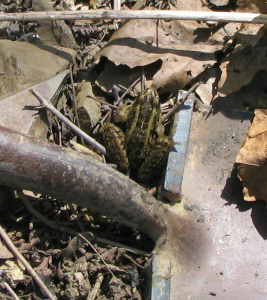
Good news on the greenhouse toad front. Many of you knew of, and asked about the toad that lived in our greenhouse. The original toad lived there since we opened the greenhouse but he (or she) died a couple of years ago. He was 12+ years old, so it lived a good long life for a toad. Since then, we have had several new crops of young toads, but none took to the greenhouse. Until this year. We now have a small (this year's) toad that has moved into the greenhouse and settled into the back corner in the dirt pile there. I've added to the pile hoping to make it toad friendly. He (or she) is dug into the dirt comfortably for about a week. I assume it goes out at night to eat and returns to sleep in the day. I'm hoping he'll hibernate there for the winter and decide it's a nice place to live. At least it will be warm when winter comes. At first, as soon as I'd approach the back corner, he'd scoot back into the dirt. I've been talking to him and moving very slowly and he seems to be getting used to me moving around. Not at all tame like original toad - you could pet him - but hopefully this one will become people friendly. I know the kids loved to see the original, so hopefully this one will stick around.

Speaking of toads reminds me of bugs. I noticed the bug population was not really bad this year - only saw a handful of Japanese beetles. Grasshoppers are around - you can easily tell by the fairly large holes they make in leaves, but not as many as some other years. We did have lots of ants this spring, way more than usual. I wondered if that was because the very wet spring drove them out of the ground. Also had very few insects in the greenhouse this spring. Again, I assume due to the cool wet spring. We only spray when necessary, and then use spray that is organic and certified safe for organic crops.

I have noticed some of the end of season crops are behind this year. Annual vines like hyacinth bean, moonflower and mina haven't bloomed yet, nor have pineapple sage or other late season flowers. I think the screaming hot weather in July hurt them. Many plants will not set buds at high temperatures, particularly high nighttime temps. That and the dry weather in conjunction seemed to set them back. We still have plenty of time left though.

Friday, August 19, 2011

Birdhouses, bee skeps and Tomato Casserole!

I'm not sure why, but sometimes I get hooked on a particular thing and really enjoy it for a while. This happens mostly with smaller objects that I like to collect. It also happens as I buy things for the shop. One that has grabbed my attention for a while is small decorative birdhouses. Not the bigger outdoor ones for birds to actually occupy, but smaller ones in all kinds of shapes and colors so that you can find one to fit in any room. I don't know why they intrigue me so - I think it's the fact of being a little house and also a touch of the outdoors brought inside.

That also holds true for my longtime fascination with bee skeps, the rounded, woven, almost basket-like structure. Originally, they did house bees before they had the boxlike hives we see today. And the skeps became associated with herb gardens, probably since bees were attracted to many of the flowers in the herb garden. While shopping with Tina and Maryanne recently, I found a plaque and also skeps on a stick to be added to potted plants and containers. Those were great finds and I also have beeswax skeps for the Christmas tree - so cute!

Now that tomato season is in full swing, I hope you're enjoying them with mozzarella and basil and also as bruschetta. Here's another easy and delicious recipe I got from P. Allen Smith's TV show. Goes great as a side dish with almost any meal...

Baked Tomatoes
Chop and drain 10 to 12 Roma tomatoes in a colander. Stir occasionally to remove some of the juice. Combine the drained tomatoes with half a roasted red bell pepper, 1/2 cup chopped fresh basil, 1/3 cup Parmesan cheese, minced garlic to taste, and 1 tablespoon olive oil. Bake in a greased casserole dish for 30-35 minutes at 350.

The rabbits are getting smart. Word must have gotten around about Lucy. Most of them run as soon as they see her now. Even a small one took off immediately the other day and often the small ones will just sit. She did kick one out from under a shrub one day and now she goes back and checks it regularly!

Friday, August 12, 2011

A slight inkling of fall...

Now that August has arrived it means a couple things. First, we're nearing the end of summer and I always think, "how did that happen?" At the beginning of summer, I think of the time stretching out in front of me and before I know it I'm looking backwards and thinking, "where did it go?" I read that the last two weeks of July are the hottest of the year, on average. So I think of the arrival of August as the start of more moderate weather. Not that there won't still be hot days, but there are mornings when I take Lucy out and I can feel a slight change in the air that makes me think fall is not too far off.

It's also prime time for harvesting and preserving your herbs. Other than newly planted herbs, everything should be well-established and ready for a large harvest. Annuals and herbaceous perennials (those that will die back in the fall - mint, oregano, etc.) can be cut back by a third to a half. Woody-stemmed perennials like thyme, sage and rosemary can be cut back by a third. You should stop these large harvest of woody perennials around Labor Day so the remaining foliage can offer some protection for the crown of the plant over winter. Pick a dry day and go out and harvest.

Either dry or freeze your bounty. If you're drying, make sure the herbs are thoroughly dry - crispy like cornflakes - before you store them in a glass jar or zippered bag away from heat or light.

Other ideas for dealing with an abundance of herbs - make an herbal vinegar or herb butter. The latter is very easy to do. Soften a stick of butter or margarine. Add about a tablespoon of chopped herb to butter and blend. Refrigerate to allow the flavor to develop. You can also freeze herb butters for a wintertime treat. Place the blended butter on plastic wrap. Shape into a log. Wrap in foil, label and freeze. When you take it out of the freezer, slice individual rounds and enjoy. Great on bread, rolls, rice, noodles, vegetables, grilled fish and more.


August is a slow time in the garden for perennials, but annuals tide us over. Looking good - calendula, nicotiana (fragrant at night), zinnias, annual statice, celosia, gem marigolds and snapdragons.

Friday, August 5, 2011

Dog Days

Well, we're into the dog days now. I laugh when I hear that phrase because when it's hot, Lucy expends the least energy possible. She doesn't move unless she has to. I laugh when she sleeps on her back too. She bends her front legs and it really looks silly.

After a storm, I notice some plants have a growth spurt. Then as it shifts back to hot and dry, the plants go into a holding pattern. If you're watering herbs, concentrate on those like basil, dill and mint that want more moisture. Lavender, sage, thyme, rosemary (outside) and gray-leaved plants are very drought tolerant once they're established and will survive quite well without supplemental water. Herbs in containers dry out quickly and need regular watering and fertilizing.

I finally saw a swallowtail caterpillar - on curly parsley. Still haven't seen any monarch caterpillars although I've seen monarchs several times. John saw the heron almost land in the neighbor's pool. It veered off because they were out in the yard. Lucy saw it fly over and she was very interested. Big birds seem to intrigue her. Big enough to chase but they just fly away.

I've been drying a lot of flowers. Many kinds that are good for drying have that papery texture and feel. They're usually quite drought tolerant too. Annual statice comes in several colors and they bloom in succession. Gomphrena, or globe amaranth come in red or purple, pink and white. Cutting them regularly produces lots of reblooms.
Kent beauty oregano is grown for its flowers, not for culinary use. Its papery flower starts out green and changes to a pinky-purple. The stems are rather arching. I cut the stems, stand them in a vase and let them dry that way.

I've been enjoying
Cold Melon Soup
.
Puree 1 medium cantaloupe, seeded and cubed along with 1/2 cup orange juice and 1 cup plain yogurt. You an add a dash of freshly grated nutmeg. Refrigerate any you don't eat right away.

Saturday, July 30, 2011

Jasmine

Jasmine has been a very popular plant for us. Every source I've read says it is not hardy here in zone 6. Ours has survived outside on the pergola for at least seven years. It's a vigorous vine that needs a support to climb. The rounded white flowers bloom in early summer and are deliciously fragrant. It's a sweet fragrant scent, but not cloyingly sweet. Many people talk about their fondness for the scent.

As sometimes happens, we lost our supplier for the small jasmine starter plants we got and potted up. So last year I decided to propagate some on my own. I thought cuttings would be easy. Usually, it's easy to root cuttings from a vigorous plant like jasmine. I did get a few to root, but the majority did not and the ones that did root took a long time. Last fall I decided to try layering. That involves taking a long stem, pinning it down into the soil and allowing roots to develop where it touches the soil. All you need for layering is stems long enough and flexible enough to pin - and patience. This was much more productive. All the stems rooted and several could be divided since they developed roots in several spots. So I potted the up in larger gallon sized pots with a trellis to start them climbing. They're available for sale now and if any are left, I'll hold them over for next year.

The plant sale continues and we have some good bargains, so if you still need something, stop by.

What looks good in the garden:

Verbena bonariensis or upright verbena - tall, but on thin, wiry stems and topped with a flat, purple flower. It reseeds reliably every year.

Blackberry lily - each orange flower lasts one day, but there are lots of them. They'll be ornamental through the fall as the blackberry-like seed pods develop.

Foliage plants like variegated sage and santolinas look good throughout the season and complement many flower colors.

Thursday, July 14, 2011

Mid July in the Garden

The butterfly bushes are blooming beautifully this year. Thanks to all the spring rain and good groundwater, the flowers are big and fat. I've never seen them look this good. In our bee and butterfly garden, we have a "Black Knight" which has the really dark purple flowers. In front of it blooms an unnamed lemon yellow daylily. What a pretty color combination. Another one I like is white coneflower and blue hyssop. It's the classic blue and white combo, plus I like the contrast in textures between the coarse coneflower and the finely cut linear foliage of hyssop. One day I was working by the hyssop and about every other stem had a bumblebee or a butterfly - mostly skippers - on it.
We never did anything to the thyme walk this spring because of the wet weather. It is so full and has been blooming several weeks. It's really one mass of flowers this summer. And the bees love it - honeybees, bumblebees, little tiny bees and other winged insects I can't identify. Also, at least one bunny's nest in the thyme walk. Think how good those bunnies smell! Lucy's been smelling around but she hasn't found them.

What looks good in the garden:
Anise hyssop - licorice scented, purple spiky flowers, bees love this too. Different than the blue hyssop above.
Coneflower - lots of big, cheerful flowers in several colors now.
Emilia - fuzzy scarlet flowers on wiry stems, deadhead for continuous blooming.
Love-lies-bleeding - chenille-like draping flowers. They'll continue to grow, but are striking even when small.
Cornflowers - loads of purple or blue flowers bloom constantly when they get going.

We've seen herons flying over, singly and a pair, but none have landed in the yard. I'm sure they're traveling between ponds.

One day, I was surprised to see a hops plant with about 90% of its leaves gone. It looked funny and I knew it wasn't like that the previous day. Looking closer, I saw big, hairy caterpillars on the few remaining leaves and the stems. They're the comma butterfly caterpillars which feed on hops. So I should have a bumper crop of them in the garden soon.

Most of my lavenders did not get trimmed in the spring because it was so wet. Then of course, blooms had formed and I didn't want to cut all the buds off. So now that they're done, it's time to trim them for shaping. I wound up cutting them all back hard. Most of them had nice new growth underneath and that will fill in nicely before it gets cold. A couple plants had little new growth and lots of deadwood. I just cut them back hard also. They may push out new foliage and be fine. If they don't, I'll pull them out and replace them in the fall. Sometimes with woody stemmed plants it is easier to start with a new plant.

What I'm harvesting now:
all varieties of mint
Chamomile flowers for tea
fast growing perennials like tarragon, savory, lemon balm, oregano, and catnip
basil - keep pinching back stems so plant is compact and full of foliage. If you don't use the cuttings with supper, dry/freeze.

My friend Sandy who does a lot of my computer work had a direct lightning strike to her house and it killed her computer. We'll be rebuilding our mailing list and the newsletter should still reach most people. The most likely to be missed are those who signed up this year. Also, once she's up and running I'll post the address for those getting an e-newsletter to submit their email address. Some of these storms this summer have been really bad. Each time one misses us, John breathes a big sigh of relief.